


 Montenegrin
 English
 Русский
 Türkçe
 Deutsch
The most common encumbrances and restrictions on a title deed, explained
Published · 4 min read
This article is more than four months old. Prices, rules and deadlines may have changed since it was published.
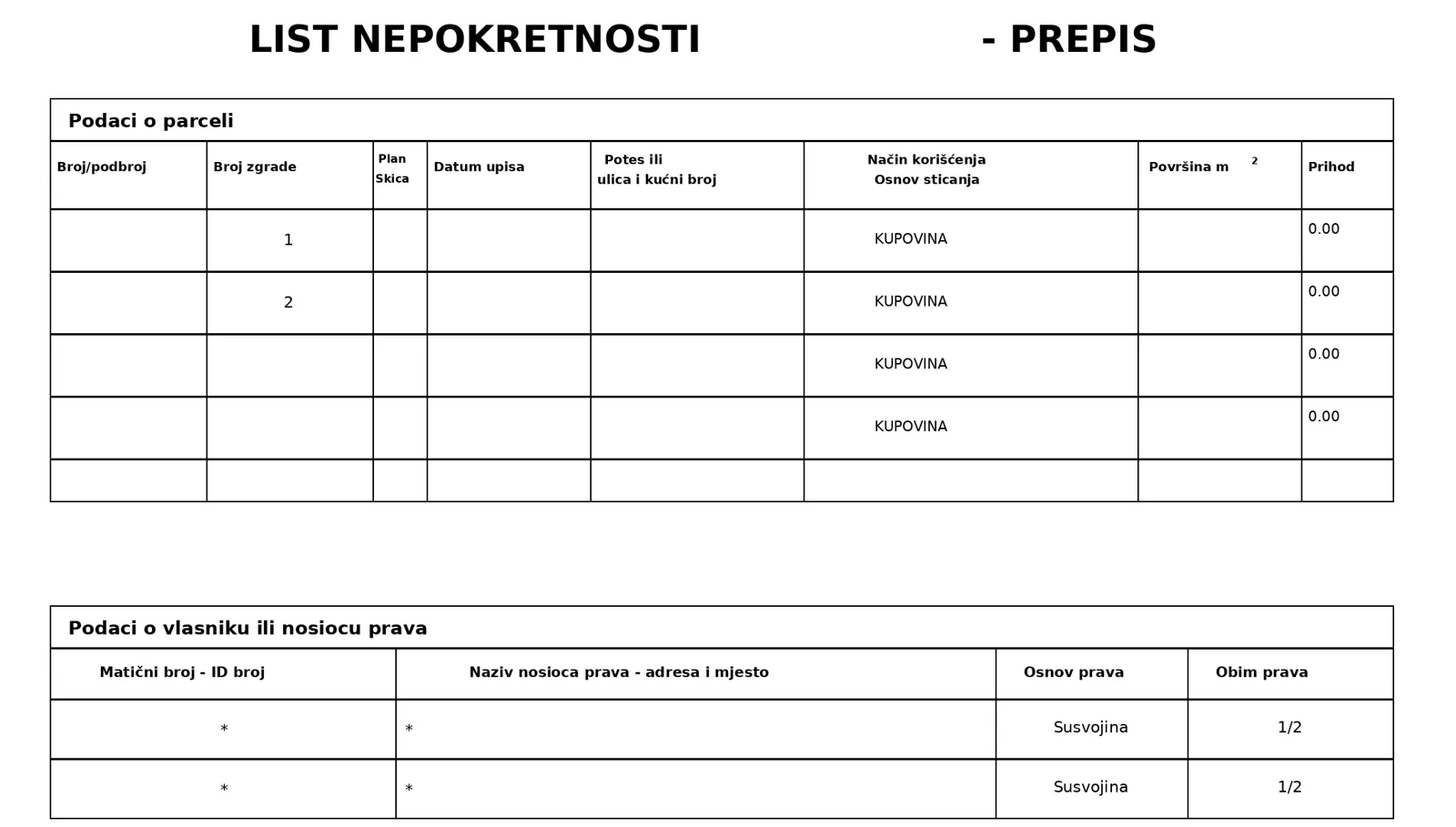
Mortgage, dispute, enforcement, restitution. When you see an encumbrance or annotation on a title deed extract, the first reaction is fear. But not every entry is a reason to walk away. Here is how to tell a serious problem from a routine item.
When you spot an encumbrance or annotation on a title deed extract (list nepokretnosti), the first thought is that something is wrong and that it is better to run from that property. In practice things are simpler. Some entries do not concern the apartment at all, some are resolved routinely during the sale itself, while others are a real reason for caution. Here are the most common ones you will meet on Montenegrin title deeds and what each really means.
Mortgage
A mortgage is the most common encumbrance you will see. It means the property is pledged to a bank as security for a loan. It sounds serious, but in practice it is routine.
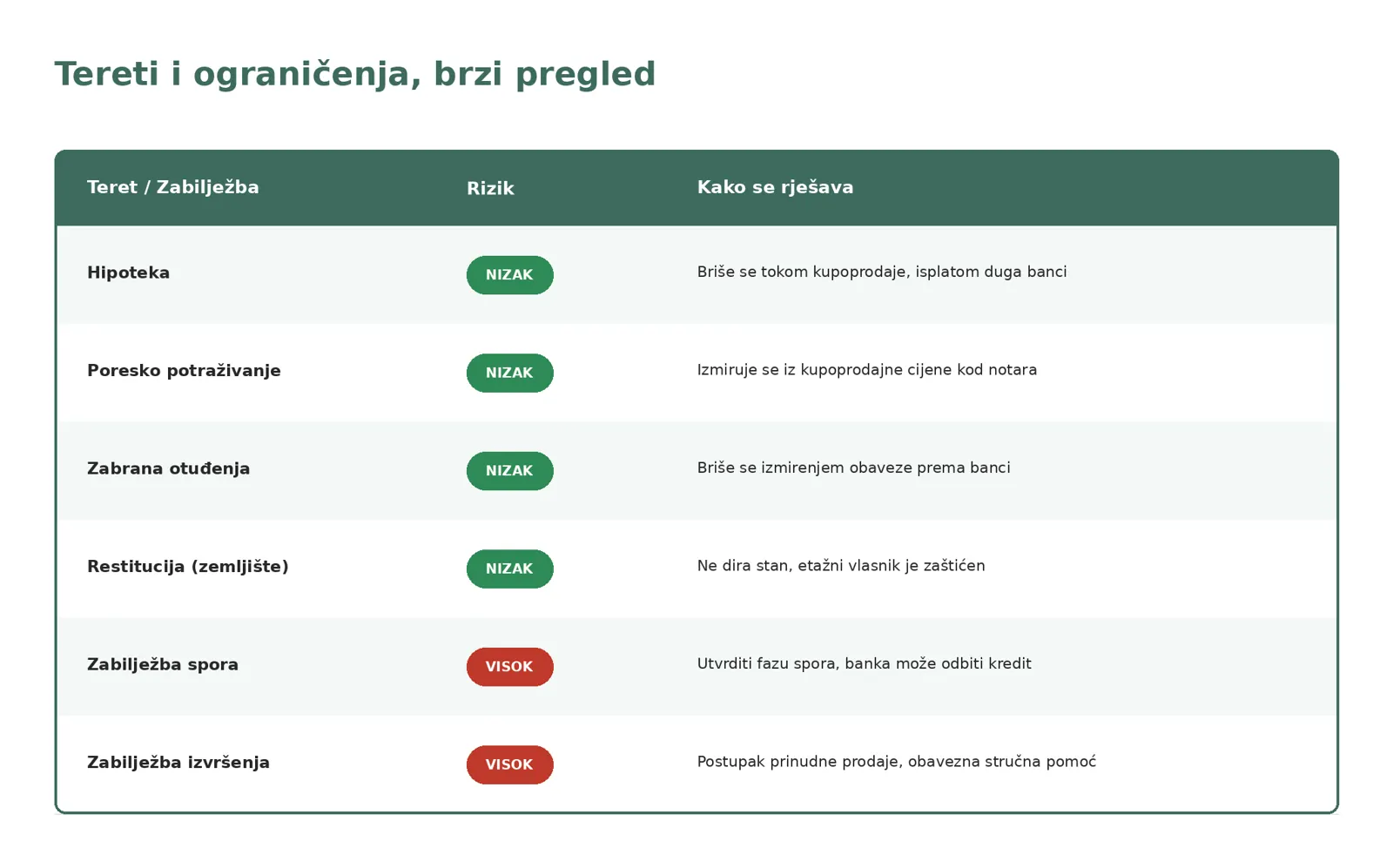
A mortgage is as a rule deleted during the sale itself. The buyer pays part of the price directly to the bank to settle the remaining debt, the bank issues consent for the mortgage to be deleted, and the rest goes to the seller. The whole procedure takes place at the notary and is completely safe if handled properly. So a mortgage is almost never a reason to give up, it only requires the correct order of steps.
Tax claim
A tax claim is an encumbrance registered by the state or the municipality when the owner has an unpaid tax debt. Like a mortgage, it is resolved by paying the debt, most often from the sale price, after which the encumbrance is deleted.
This is not an obstacle to buying either, provided the exact amount of the debt is known and it is settled before or during the transfer of ownership. Here too the notary makes sure everything is clean before the deal is concluded.
Annotation of an enforcement order
This is a more serious entry. An annotation of enforcement means that proceedings for the forced collection of a debt have been started against the owner, and that the property may be sold to satisfy the creditor.
Caution is needed here. A property under enforcement can be sold, but the procedure is more complex and requires establishing exactly who the creditor is, how large the debt is and what stage the proceedings are at. Without professional help and a clear picture, this is not ground to navigate alone.
Annotation of a dispute
An annotation of a dispute means that court proceedings are under way whose outcome may affect the ownership right or another right over the property. In other words, someone is contesting something connected with that property.
This is a warning, not an automatic ban. The property can still be traded, but the buyer takes it over with that annotation, which means the outcome of the dispute may affect them too. Banks often refuse to grant a loan for a property with an active annotation of a dispute, which narrows the circle of buyers to those with cash. Before any decision, the status and stage of the dispute must be established.
Annotation of restitution
Restitution is a claim for the return of property to former owners or their heirs, most often connected with property nationalised in the past. It often concerns the land on which the building stands, not the apartment itself.
This sounds frightening, but in practice it is common in Montenegro, especially with older buildings, and it is not an obstacle to buying an apartment. The key lies in the principle of condominium ownership. The owner of an apartment has an ownership right over their separate part of the building, and restitution claims for land are resolved by compensating the former owners, not by demolishing the building or taking away apartments. Provided the building was legally built, the apartment owner is protected and restitution over the land practically does not concern them.
Ban on sale and encumbrance
This entry means the owner may not sell or further encumber the property while the ban lasts. It appears most often with housing loans, where the bank registers the ban as additional security until the loan is repaid.
While this ban stands, the property cannot be transferred to a new owner. But as with a mortgage, it is resolved by settling the obligation to the bank, after which the ban is deleted and the sale can proceed normally.
With us the check has already been done
What gives you additional security is that at Horizon Real Estate we check every property before we include it in our offer at all. If the papers are not clean or there is an encumbrance that cannot be resolved safely, that property is not in our offer. This means that when you view an apartment with us, you have already passed the first and most important filter, the document check. Our job is to give you peace of mind and a safe purchase, with no hidden surprises.
If you are thinking about buying or selling a property in Podgorica, contact us on Instagram @horizonrealestate.me or visit horizonrealestate.me.
Author: Marko Ražnatović, Horizon Real Estate
A Horizon agent values your property for free and answers all your questions.